
GLP-1 Pills vs. Weight Loss Surgery: What Patients Should Know in 2026
Oral GLP-1 medications are changing the weight loss conversation. But are pills like Wegovy tablets or Foundayo better than gastric sleeve, gastric bypass, SADI surgery, or other bariatric procedures? The answer depends on your health history, weight loss goals, budget, and how durable you need your results to be.
For years, many patients avoided GLP-1 medications because they did not want weekly injections. That barrier is starting to change. In 2026, oral GLP-1 medications have become one of the biggest developments in obesity medicine. Patients now have more choices than ever before, including medical weight loss, gastric balloons, gastric sleeve, gastric bypass, SADI surgery, and revision procedures.
At JourneyLite, we believe patients deserve a complete conversation. A pill may be the right tool for one person, while surgery may be the better long-term option for another. The most important question is not simply, “Which treatment is newest?” The better question is, “Which treatment gives me the safest, most realistic, and most durable chance of success?”
What Are GLP-1 Pills?
GLP-1 medications work by mimicking a hormone involved in appetite, fullness, and blood sugar regulation. Injectable GLP-1 medications such as Wegovy and Zepbound became popular because they helped many patients lose significant weight without surgery. Now, oral versions are expanding the treatment landscape. For general patient education on prescription obesity treatment, the National Institute of Diabetes and Digestive and Kidney Diseases offers a useful overview.
Two oral GLP-1 options have drawn major attention:
- Wegovy pill: an oral semaglutide tablet for chronic weight management.
- Foundayo: the brand name for orforglipron, an oral GLP-1 medication that can be taken without food or water restrictions.
These medications are exciting because they may make GLP-1 treatment easier for patients who dislike needles, travel frequently, or prefer a once-daily pill over a weekly injection. Patients who want to compare medication pricing can also review JourneyLite’s weight loss medication cost guide.
How Much Weight Can Patients Lose With GLP-1 Pills?
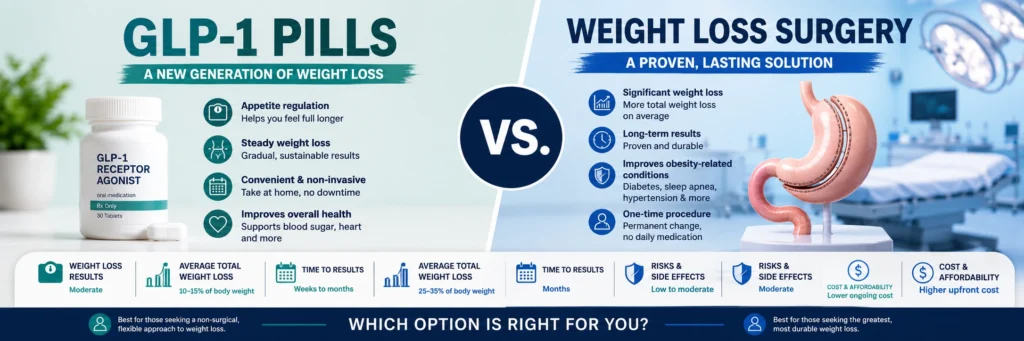
Clinical trial results for oral GLP-1 medications have been encouraging. Oral semaglutide data have shown average weight loss in the low-to-mid teen percentages in many patients, depending on whether the analysis includes only patients who stayed on treatment or all patients regardless of treatment completion. Foundayo/orforglipron trial results also showed clinically meaningful weight loss compared with placebo. For more detail on oral semaglutide clinical data, see the New England Journal of Medicine oral semaglutide study.
These are important results. For some patients, a 10% to 15% total body weight loss can improve blood pressure, blood sugar, sleep apnea symptoms, joint pain, and overall quality of life. But the key word is treatment. Like most chronic medications, GLP-1 medications generally work best while patients continue taking them.
How Does Weight Loss Surgery Compare?
Bariatric surgery works differently than medication. Procedures such as gastric sleeve, gastric bypass, and SADI surgery do not simply suppress appetite temporarily. They change stomach size, hunger signaling, fullness, metabolism, and in some cases the way food and calories are absorbed.
Because of these physiologic changes, surgery often produces more powerful and more durable weight loss than medication alone. This is especially true for patients with class II or class III obesity, patients with obesity-related medical problems, and patients who have lost and regained weight many times. A recent JAMA Surgery comparison of bariatric surgery and GLP-1 receptor agonists highlights why long-term treatment selection matters.
GLP-1 Pills
No injections, no procedure, may reduce appetite and cravings, easier entry point for many patients. Learn more about JourneyLite’s medical weight loss program.
Requires ongoing medication use, may be expensive long term, side effects are possible, weight regain may occur after stopping. Compare current options on our medication cost page.
Injectable GLP-1s
Strong clinical results for many patients, once-weekly options, useful for medical weight loss or post-surgery support.
Needles, insurance coverage issues, ongoing cost, supply problems, side effects, and long-term adherence challenges. Patients can review Zepbound information and other medication options at JourneyLite.
Gastric Sleeve
Powerful one-time procedure, no intestinal bypass, strong long-term weight loss for many patients. Learn more about gastric sleeve surgery at JourneyLite.
Requires surgery, lifestyle commitment, vitamin/protein attention, and careful follow-up. Patients comparing cost can review JourneyLite pricing and financing.
Gastric Bypass
Excellent option for many patients with reflux, diabetes, or higher metabolic risk. Learn more about gastric bypass surgery.
More complex than sleeve, requires lifelong vitamin compliance and follow-up.
SADI Surgery
Can be very effective for higher BMI patients or selected revision cases. Learn more about SADI surgery.
More complex procedure, requires careful nutrition monitoring and long-term follow-up.
Gastric Balloon
Non-surgical option, temporary, helpful for patients not ready for surgery or who do not qualify. Learn more about the Allurion swallowable gastric balloon.
Less weight loss than surgery for most patients, temporary device, requires lifestyle support. Patients can also review Allurion’s general patient information at Allurion.com.
The Cost Question: Pills vs. Surgery
Cost is one of the biggest issues in the GLP-1 conversation. Even when medications work well, monthly costs can add up quickly. If a medication costs hundreds or even over a thousand dollars per month, the long-term expense can eventually exceed the cost of a one-time bariatric procedure.
This is one reason many patients compare GLP-1 therapy with self-pay gastric sleeve surgery. A medication may feel less expensive at the beginning because the cost is spread out month to month. But over several years, ongoing medication costs can become substantial. JourneyLite also offers a broader pricing and financing overview for patients comparing options.
Medication Costs Continue
GLP-1 medications usually require ongoing use to maintain results. Stopping medication may lead to increased hunger and weight regain in some patients. For more on this topic, read JourneyLite’s article on GLP-1s vs. surgery for long-term results and costs.
Surgery Is a One-Time Treatment
Gastric sleeve, bypass, and SADI involve upfront cost and recovery, but the metabolic effect can last for years when paired with healthy habits. Compare options on our gastric sleeve page.
Combination Care May Help
Some patients benefit from both approaches: surgery for durable weight loss and medication when additional appetite control is needed. JourneyLite’s medical weight loss program can support appropriate patients before or after surgery.
Are GLP-1 Pills Better Than Surgery?
For some patients, yes. For others, no. GLP-1 pills may be a good option for patients who:
- Have a lower BMI and do not qualify for bariatric surgery.
- Want to avoid injections.
- Are not ready for a procedure.
- Need a bridge before surgery.
- Need help with weight regain after a previous procedure.
- Have medical reasons surgery is not appropriate right now.
Weight loss surgery may be a better option for patients who:
- Need more significant weight loss.
- Have type 2 diabetes, sleep apnea, high blood pressure, fatty liver disease, or joint pain.
- Have struggled with repeated weight regain after diets or medications.
- Want a treatment that does not depend on taking a costly medication indefinitely.
- Have a BMI high enough that medication alone is unlikely to achieve their goal weight.
- Want to compare sleeve, bypass, SADI, balloon, and medication options in one program.
What Happens If You Stop GLP-1 Medication?
This is one of the most important questions patients should ask. GLP-1 medications do not cure obesity. They help control appetite and food noise while the medication is active. If the medication is stopped, appetite can return, and some patients regain a significant amount of weight.
That does not mean GLP-1 medications are bad. It means they should be understood as chronic therapy, similar to medications for blood pressure, cholesterol, or diabetes. Patients should ask:
- Can I afford this medication long term?
- Will my insurance continue covering it?
- What is my plan if coverage changes?
- What side effects should I watch for?
- Would surgery give me a better long-term result?
Why JourneyLite Is Different
Many weight loss programs offer only one type of treatment. Some online companies offer medication only. Some surgery centers focus only on surgery. JourneyLite offers a broader range of options, which allows for a more individualized plan.
JourneyLite patients can explore:
- Medical weight loss programs
- GLP-1 medications and alternatives
- Gastric sleeve surgery
- Gastric bypass surgery
- SADI surgery
- Revision bariatric surgery
- Gastric balloon options
- Dietitian support and long-term follow-up
This matters because obesity treatment is not one-size-fits-all. The best treatment for a 32-year-old patient with a BMI of 31 is not always the same as the best treatment for a 52-year-old patient with a BMI of 46, diabetes, sleep apnea, and years of weight cycling. Patients can view JourneyLite’s Ohio, Kentucky, and Indiana office information on our maps and locations page.
When Medication and Surgery Work Together
It is also important to understand that GLP-1 medications and surgery are not always competitors. In some cases, they can be complementary tools.
For example, medication may be useful:
- Before surgery to reduce weight and improve operative risk.
- After surgery if hunger or cravings return.
- For patients with weight regain years after a procedure.
- For patients who need additional metabolic support.
- For patients who are not candidates for surgery but still need medical treatment.
At JourneyLite, the goal is not to declare one treatment the winner for everyone. The goal is to help each patient choose the right tool at the right time. Patients can start with a personalized consultation request or review our online information session.
Questions to Ask Before Choosing a GLP-1 Pill or Surgery
- How much weight do I realistically need to lose to improve my health?
- What is my BMI?
- Do I have diabetes, sleep apnea, high blood pressure, reflux, or fatty liver disease?
- Have I regained weight after previous diets or medications?
- Can I afford medication long term?
- Would I prefer a daily pill, weekly injection, balloon, or surgical option?
- What happens if my insurance changes?
- Am I looking for short-term help or a long-term metabolic treatment?
Final Thoughts: New Pills Are Exciting, But They Do Not Replace Every Option
GLP-1 pills are one of the most important developments in weight loss treatment. They may help many patients who previously avoided injections or did not want a procedure. But they are not automatically better than surgery, and they are not the right answer for every patient.
Bariatric surgery continues to offer some of the most powerful and durable weight loss results available. For many patients, especially those with higher BMI levels or obesity-related medical conditions, gastric sleeve, gastric bypass, or SADI surgery may still provide the best long-term path.
The best decision starts with a complete evaluation. JourneyLite can help you compare medication, balloon, and surgical options so you can choose a treatment plan that fits your goals, your health, and your life.

Written by Dr. Trace Curry
Dr. Trace Curry, MD, FASMBS, is the Medical Director of JourneyLite and a board-certified general surgeon with extensive experience in bariatric and metabolic surgery. He has helped thousands of patients compare surgical and non-surgical weight loss options, including gastric sleeve, gastric bypass, SADI surgery, revision procedures, gastric balloons, and medical weight loss programs.
Dr. Curry’s goal is to help patients understand the benefits, risks, costs, and long-term expectations of each treatment option so they can make informed decisions about their health.
Frequently Asked Questions
Are GLP-1 pills as effective as injections?
Some oral GLP-1 medications have shown strong clinical trial results, but results vary by medication, dose, adherence, side effects, and patient factors. Some injectable GLP-1/GIP medications may still produce greater average weight loss in certain studies. A medical evaluation is the best way to compare options. You can review JourneyLite’s medication cost and options page for more information.
Are GLP-1 pills better than gastric sleeve?
Not necessarily. GLP-1 pills may be a good non-surgical option for some patients, but gastric sleeve surgery often produces more durable long-term weight loss, especially for patients with higher BMI levels or obesity-related health conditions.
Can I take GLP-1 medication after bariatric surgery?
Yes, some patients may use weight loss medication after bariatric surgery, especially if they experience weight regain, increased hunger, or a plateau. This should be done under medical supervision through a program such as JourneyLite’s medical weight loss program.
What is the biggest downside of GLP-1 medications?
Common concerns include nausea or other gastrointestinal side effects, long-term cost, insurance coverage problems, availability, and the possibility of weight regain after stopping therapy.
What is the biggest advantage of bariatric surgery?
Bariatric surgery can produce powerful and durable weight loss because it changes stomach capacity, hunger signaling, fullness, and metabolism. It may also improve obesity-related conditions such as type 2 diabetes, sleep apnea, high blood pressure, reflux, and fatty liver disease. Patients can compare procedures on JourneyLite’s weight loss surgery overview.
Does JourneyLite offer both medications and surgery?
Yes. JourneyLite offers medical weight loss, GLP-1 options, gastric balloons, gastric sleeve, gastric bypass, SADI surgery, and revision procedures. This allows patients to compare a full range of treatment options in one program.
- FDA announcement on Foundayo/orforglipron approval
- JAMA report on FDA approval of oral orforglipron
- Novo Nordisk announcement on Wegovy pill approval and OASIS 4 results
- New England Journal of Medicine: Oral semaglutide 25 mg in adults with overweight or obesity
- JAMA Surgery: Obesity treatment with bariatric surgery vs GLP-1 receptor agonists
- NIDDK: Prescription medications to treat overweight and obesity
- ASMBS patient resources on metabolic and bariatric surgery