

Robotic assistance is one way to perform minimally invasive bariatric surgery. It does not automatically make an operation safer or more effective. The useful comparison is the particular procedure, your health needs, and the experience of the surgeon and operating-room team.
Does a robot perform the surgery on its own?
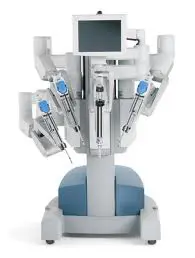
No. The surgeon controls the instruments. In conventional laparoscopy, the surgeon manipulates instruments directly. With robotic assistance, the surgeon uses controls that translate their movements to instruments inside the body. The FDA explains that these systems require direct human control.
Robotic systems can provide a three-dimensional view and help with tasks in confined spaces. Those technical features should be considered separately from evidence that patients have fewer complications or better long-term results.
| Question | Conventional laparoscopy | Robotic assistance |
|---|---|---|
| Who controls the instruments? | The surgeon, directly. | The surgeon, through the system’s controls. |
| Is it minimally invasive? | Uses small access incisions. | Also uses minimally invasive access. |
| What should the comparison focus on? | The same operation, comparable patients, relevant outcomes, and team experience. | |
Is robotic bariatric surgery better?
The evidence does not establish one approach as best for every bariatric operation. A 2024 analysis of registry data from 2015–2021 found broadly comparable 30-day outcomes across sleeve, gastric bypass, and duodenal switch, with some differences in specific complications and longer robotic operating times.
A 2025 study of first-time sleeve and Roux-en-Y gastric bypass operations, using 2015–2022 registry data, found a different pattern by procedure. Robotic sleeve was associated with more overall complications, leaks, and bleeding. Robotic bypass was associated with fewer overall complications and bleeding, with similar leak rates. Combining all bariatric operations into one headline can hide these distinctions.
What about revision or conversion surgery?
Revising an earlier operation is a separate question from performing a first-time procedure. A 2025 study of 72,189 conversion operations from 2020–2022 found no statistically significant difference in the overall serious-complication rate between approaches. Robotic cases had longer operating times and more readmissions. This does not establish that every type of revision has the same results.
How should patients interpret these studies?
These are observational registry comparisons, not trials that randomly assigned each patient to an approach. Statistical adjustment cannot eliminate every difference in patients, case complexity, surgeons, or hospitals. The studies also draw on overlapping registry years, so their populations should not be counted as entirely independent evidence.
Thirty-day findings do not answer every question about long-term weight loss, reflux, nutrition, or quality of life. Our interpretation is that these results support a procedure-specific discussion, rather than a universal promise of robotic superiority or a blanket claim of no benefit.
What about operating time and cost?
Longer robotic operating times appear in the studies above, but a study average is not a prediction for your operation. Ask how the approach affects the expected procedure and anesthesia time in your surgeon’s practice.
A 2024 cost study of 47,788 patients in Florida hospitals, using 2017–2021 data, found higher total costs for robotic sleeve and bypass than for laparoscopic procedures. It also reported changes over time. These historical hospital-level estimates are not a current JourneyLite price or your insurance out-of-pocket amount.
Request an individualized estimate and clarify what it includes: surgeon, facility, anesthesia, follow-up, and any charges associated with the approach. Compare the expected clinical value alongside the financial details.
Questions to ask before choosing an approach
- Which bariatric operation fits my health history, and why?
- Why do you recommend this approach for my particular operation?
- How much experience do you and the team have with it?
- What are your complication and readmission results for comparable patients?
- Would the approach affect recovery, operating time, or my cost?
- What would make you change the approach during surgery?
The FDA encourages patients to discuss alternatives and the surgeon’s training and experience. A consultation should address those questions along with the operation itself. Explore JourneyLite’s surgical weight-loss information and bariatric surgery safety guide.
Frequently Asked Questions About Robotic Bariatric Surgery
Is the robot making surgical decisions?
No. The surgeon controls the system and makes the operative decisions.
Does robotic assistance mean I will lose more weight?
The short-term studies discussed here do not establish a long-term weight-loss advantage. Ask for evidence relevant to your operation and goals.
Is robotic surgery always better for a revision?
No universal advantage is established. The earlier operation, reason for revision, planned procedure, and team’s experience all need consideration.
Should I choose a surgeon based only on robotic availability?
Ask about the proposed operation, alternatives, training, experience, outcomes, and follow-up. The equipment is one part of that discussion.
Sources and further reading
General education. Your care team can help apply the evidence to your health history and proposed operation.