
Gastric sleeve: a simpler operation with permanent change and lifelong care.
Gastric sleeve surgery removes most of the stomach to create a narrow sleeve. It does not reroute the intestine, but it permanently changes stomach capacity and metabolic signaling and still requires careful preparation, vitamins, laboratory monitoring, and long-term follow-up.
Individual evaluation required | Insurance and self-pay review available | Results and recovery vary
Content authorship and medical review
Clinical content by
Medically reviewed by
Trace Curry, MD, FASMBS
Bariatric surgery
Last medically reviewed
Editorial standard: JourneyLite Medical Editorial Policy
How vertical sleeve gastrectomy changes capacity and appetite
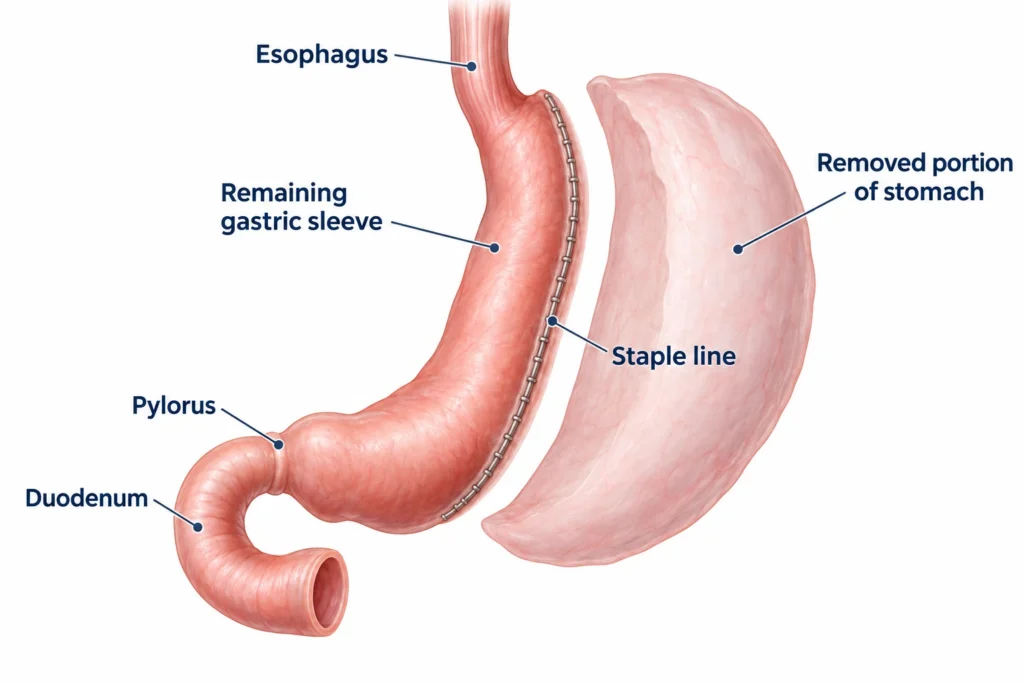
During sleeve gastrectomy, a surgeon removes approximately 80% of the stomach and closes the remaining narrow, sleeve-shaped stomach with staples. Food continues through the stomach and intestine in its usual order because the small intestine is not bypassed.
The operation helps limit meal size and changes signals involved in hunger, fullness, metabolism, and blood sugar. Learn more about how sleeve and bypass affect hunger hormones. Sleeve gastrectomy is not reversible because the removed portion of the stomach cannot be restored. The safest choice depends on your health history, reflux or swallowing symptoms, metabolic conditions, medications, prior surgery, nutrition status, and ability to maintain lifelong follow-up.
Patients from neighboring states can review our guides to gastric sleeve care for Indianapolis and Central Indiana and gastric sleeve care for Kentucky patients for local consultation, surgery travel, and follow-up information.
Why sleeve may fit - and what it asks of you
No intestinal bypass
Sleeve surgery changes the stomach without rerouting the small intestine or implanting a device. It is generally less complex than gastric bypass while still requiring major-surgery precautions.
Effective metabolic treatment
The smaller stomach and altered biological signals can support substantial weight loss and improvement in obesity-related conditions. Individual response and long-term maintenance vary.
Permanent +/- reflux
The removed stomach cannot be replaced. Most patients prefer this, but some don't. Sleeve can sometimes resolve GERD issues, but it can also cause new reflux or worsen existing heartburn.
Questions to answer before choosing gastric sleeve
Your consultation should connect the operation to your health, symptoms, priorities, and ability to follow the long-term plan.
- Why might sleeve fit me better than bypass, SADI, band, medication, or continued non-surgical care?
- How could reflux, heartburn, a hiatal hernia, or swallowing symptoms affect the recommendation?
- What are my personalized risks for bleeding, staple-line leak, blood clots, infection, narrowing, or another procedure?
- How might sleeve affect diabetes, sleep apnea, high blood pressure, or other obesity-related conditions?
- What diet stages, protein, hydration, and activity plan will I follow during recovery?
- Which vitamins and laboratory tests will I need long term?
- What symptoms require an urgent call or emergency evaluation?
- What does my insurance benefit or self-pay estimate include?
Considering the $10,000 self-pay gastric sleeve package?
JourneyLite's current package groups the surgeon, anesthesia, facility, and one year of postoperative office care for eligible primary sleeve patients. Clinical eligibility, exclusions, outside testing, prescriptions, and other costs can affect the total, so request the current written terms.
What the gastric sleeve pathway includes
Personalized evaluation
Review health history, prior treatment, reflux, metabolic conditions, medications, nutrition, goals, and procedure alternatives.
Preparation
Complete required testing, education, nutrition planning, medication instructions, and insurance or self-pay review.
Surgery and recovery
Follow the surgical team's plan for pain control, walking, hydration, diet progression, activity, and warning signs.
Gastric sleeve recovery timelineLifelong monitoring
Continue vitamins, laboratory testing, nutrition support, clinical follow-up, and healthy routines after the initial recovery.
Request a gastric sleeve consultation
Tell JourneyLite that you are interested in gastric sleeve or comparing bariatric procedures. A team member will follow up about evaluation, insurance benefits, self-pay information, and scheduling.
Submitting this form requests contact and does not confirm an appointment or establish that gastric sleeve is appropriate. Do not use this form for an emergency or urgent postoperative concern.
"*" indicates required fields
Clinical references used for this overview
JourneyLite's visible page content and structured data are aligned with these authoritative patient-education resources. Your surgeon's individualized instructions take priority.
Answers before your next step
What is gastric sleeve or VSG surgery?
Vertical sleeve gastrectomy is a metabolic and bariatric operation that removes the side portion of the stomach, leaving a narrow tubular stomach shaped like a sleeve on a jacket. The small intestine is not rerouted, resulting in significantly lower long-term risk than gastric bypass or SADI.
How much of the stomach is removed?
Approximately 80% of the stomach is commonly removed. The exact operation is individualized, and the removed stomach tissue cannot be restored, so sleeve gastrectomy is considered permanent.
How much weight can I expect to lose after gastric sleeve?
Weight loss varies with starting health, anatomy, follow-up, nutrition, activity, medications, and other factors. At JourneyLite, we set a goal for patients to lose 60-80% of excess body weight, but results cannot be guaranteed.
Can gastric sleeve cause or worsen reflux?
Yes. Sleeve gastrectomy may cause new reflux or worsen existing heartburn in some patients. Significant reflux, swallowing symptoms, or esophageal disease can influence whether sleeve or another option is recommended. For persistent symptoms after surgery, learn about revision options after gastric sleeve and discuss whether an evaluation is appropriate.
What are important gastric sleeve risks?
Risks include bleeding, infection, staple-line leak, blood clots, narrowing or twisting of the sleeve, reflux, dehydration, nutritional deficiencies, gallstones, weight recurrence, and the possible need for additional procedures. Rarely, severe complications or death can occur.
Will I need vitamins after gastric sleeve?
Yes. Sleeve patients generally need long-term vitamin and mineral supplementation plus periodic laboratory monitoring. The exact products and doses should come from your bariatric team. Read more about vitamins after gastric sleeve surgery.
Does insurance cover gastric sleeve?
Some plans cover sleeve surgery for patients who meet the plan's criteria, while others exclude bariatric surgery or require a designated facility. JourneyLite offers affordable self-pay options for patients whose insurance excludes bariatric surgery, including our $10,000 self-pay gastric sleeve package for eligible primary sleeve patients. Verification is not a guarantee of payment.
Choose sleeve for its clinical fit - not only its popularity.
JourneyLite can help you compare gastric sleeve with bypass, SADI, band, medication, and non-surgical care using your medical history, reflux, goals, risks, coverage, and follow-up needs.
This page provides general education and does not replace individualized medical advice. Treatment requires evaluation by a qualified medical professional. Individual results vary.