

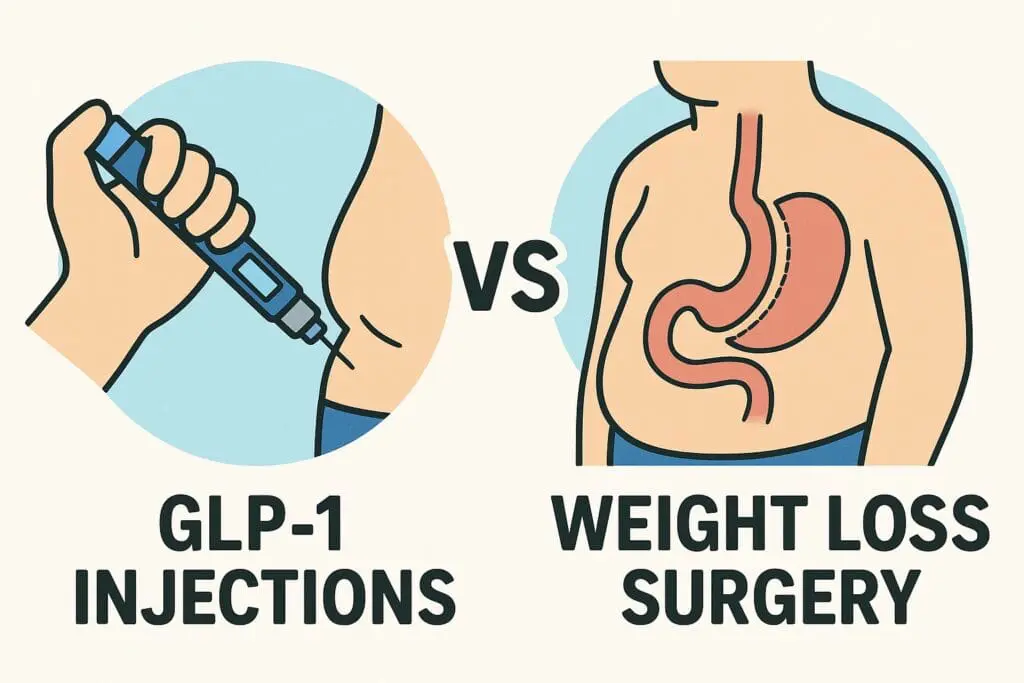
In the rapidly evolving world of weight loss treatments, GLP-1 medications like semaglutide (Ozempic®, Wegovy®) and tirzepatide (Mounjaro®, Zepbound®) have generated significant buzz. However, for individuals seeking substantial, long-term weight loss, one option continues to lead the pack: bariatric surgery.
Bariatric Surgery vs. GLP-1s: A Clear Weight Loss Advantage
Studies have consistently shown that bariatric surgery provides up to five times more weight loss compared to GLP-1 medications. While GLP-1s typically result in a 15%–20% total body weight loss, bariatric procedures such as gastric sleeve and gastric bypass can help patients lose 60%–80% of their excess weight, often translating to a 30%–40% total body weight reduction.
For example:
-
A 300 lb person on GLP-1s may lose 45–60 lbs.
-
The same person undergoing gastric sleeve surgery could lose 90–120 lbs or more. The odds of them sustaining this weight loss is tremendously greater than with GLP-1s.
Why Surgery Works Better
1. Permanent Anatomical Change
Bariatric surgery physically alters the stomach and/or digestive process. This not only reduces how much you can eat but also changes hormonal signals related to hunger and satiety—effects that GLP-1s attempt to mimic but cannot replicate fully.
2. Long-Term Metabolic Impact
Surgery induces metabolic changes that improve insulin sensitivity, reduce inflammation, and reset the body’s weight “set point.” These effects are longer-lasting and more profound than those from medication alone.
3. No Lifelong Expensive Injections
GLP-1 medications require weekly injections indefinitely to maintain results. Once discontinued, most patients regain the weight. Bariatric surgery, on the other hand, delivers long-term weight loss without lifelong dependency on medications.
4. Greater Improvements in Comorbidities
Bariatric surgery is more effective at resolving obesity-related conditions such as:
-
Type 2 diabetes (often complete remission)
-
Sleep apnea
-
Hypertension
-
Joint pain
-
PCOS and fertility issues
Who Should Consider Bariatric Surgery?
If you:
-
Have a BMI of 30+ with health issues, or 35+ without
-
Have tried and failed multiple diets or medications
-
Want to compare ongoing medication costs with JourneyLite’s $10,000 gastric sleeve package
-
Are looking for a permanent, life-changing solution
…then bariatric surgery may be the most effective option.
Final Thoughts
While GLP-1 medications offer a helpful tool for some, they simply can’t match the weight loss or health benefits of bariatric surgery. With five times the results, surgery can offer value and effectiveness. A financial comparison should use your actual medication price, treatment duration, insurance coverage and total surgical and follow-up costs. At JourneyLite, we accept most insurance, Medicare, and Medicaid and we offer the lowest self-pay price for gastric sleeve in the mid-west.
Current medication pricing
Manufacturer self-pay injection prices checked September 16, 2026. These are medication-only examples for eligible patients, not JourneyLite program quotes or guaranteed insurance copays. Prices vary by product, dose, coverage and offer eligibility.
- Wegovy injection: Eligible patients new to the Wegovy Savings Offer or NovoCare Pharmacy can pay $199 per fill for the first two fills of 0.25 mg or 0.5 mg through December 31, 2026. The ongoing self-pay price is $349 per fill for 0.25–2.4 mg; Wegovy HD 7.2 mg is $399 per fill. Each fill is one box of four weekly pens. Wegovy pricing and eligibility.
- Zepbound KwikPen: Self-pay pricing is $299 for 2.5 mg (starting dose, not maintenance) and $399 for 5 mg. The purchase offer is $449 for 7.5, 10, 12.5 or 15 mg; after the first purchase, continued eligibility requires buying the refill within 45 days of receiving the previous fill. Without that offer, regular KwikPen pricing is $499 for 7.5 mg and $699 for 10–15 mg. One KwikPen supplies four weekly doses (28 days). These prices do not describe Zepbound single-dose autoinjector pens. Zepbound pricing and full terms.
Eligibility restrictions apply, and manufacturers may change or end offers. Additional taxes, fees, clinical visits, laboratory testing or supplies may affect the total. Insurance coverage can change your out-of-pocket cost. Confirm the current price for your prescribed product before filling it. Four-week fills do not equal calendar months, so a fixed $6,000 annual medication estimate is not appropriate for everyone.