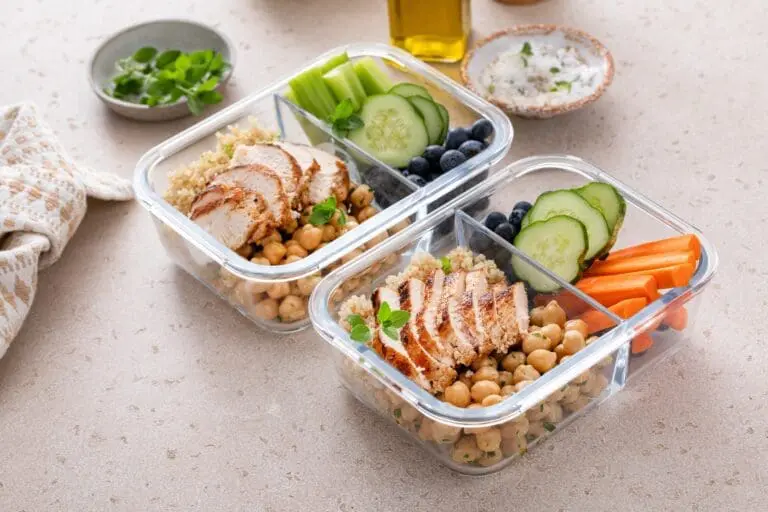

A useful substitution changes the meal in a way that fits your goals while still providing nourishment and enjoyment. A “no sugar added” label does not mean a food contains no carbohydrate.
Compare portions before products
| Original portion | Alternative to consider | Check before choosing |
|---|---|---|
| 1 cup cooked rice | 1 cup cooked cauliflower rice | Sauces, added oil, and what else completes the meal. |
| One sandwich roll | Lettuce leaves around the same filling | Raw-lettuce tolerance and portion of the filling. |
| One sweetened yogurt container | The same weight of plain yogurt | Total carbohydrate and protein on both labels. |
| One sweetened drink | The same volume of an unsweetened drink | Milk, syrups, and other additions. |
These are practical portion comparisons, not claims that the foods provide equal calories or nutrients. Measure your actual portion and use its label or a reliable food database for a numerical comparison.
Read past the front of the package
Check total carbohydrate, fiber, protein, and serving size. Sugar-free candy may contain sugar alcohols, and a no-sugar-added dessert can still contain starch or naturally occurring sugars. Product wording alone cannot determine whether it fits your plan. See total versus net carbohydrates.
Keep the meal balanced
Choose swaps that fit your protein goal and leave room for tolerated vegetables and other nutrient-rich foods. Nuts, cheese, and oils may be lower in carbohydrate than some alternatives but still add energy quickly. After surgery, food texture and portion instructions take precedence over a shopping claim.
Frequently asked questions
Are veggie straws equivalent to a serving of vegetables?
Do not assume so from the name. Check ingredients, the labeled portion, and nutrients when deciding how to use a packaged snack.
Sources and further reading
General education. Your JourneyLite care team can help adapt this information to your health history and treatment plan.